

Early Life and Education
Pierre Chapo (1927–1987) was a French designer whose work united craftsmanship, structure, and simplicity. Born in Paris on 23 July 1927, he first trained his hand as a painter after his family moved to Cher. Meeting a shipbuilder introduced him to the craft of woodwork and redirected his creative path. Drawn by the beauty of proportion and construction, Chapo enrolled at the École Nationale Supérieure des Beaux-Arts in Paris, where he studied architecture with Henri Larrieu and Louis Aublet.
His studies were interrupted by travels across Scandinavia, military service in Germany, and a year in Central America. While interning in Arizona, he visited Frank Lloyd Wright’s Taliesin West, an experience that left a lasting impression on his understanding of form and material. Wright’s fusion of craft and architecture became a quiet foundation for Chapo’s own approach to design.
Beginnings in Paris
Returning to France in the late 1950s, Chapo began creating furniture that reflected both architectural logic and tactile honesty. Working alongside his wife Nicole who helped with marketing, he produced the first series of designs that would soon attract a devoted clientele. Interestingly, one of his first clients was Samuel Beckett for whom he created the ‘’Godot bed’’ named after Beckett’s famous play.
In 1958, Pierre and Nicole founded Galerie Chapo on Boulevard de l’Hôpital in Paris. The gallery became a meeting point for contemporary craftsmanship, displaying Chapo’s own work alongside pieces by artists such as Isamu Noguchi. Chapo shared Noguchi’s organic approach to arts and crafts and both designers resisted the stark industrial look that was dominant in the post-war period under the influence of socialism. Chapo believed that furniture should be useful but never cold, functional yet beautiful, guided by natural proportion and the golden ratio.







The Language of Wood
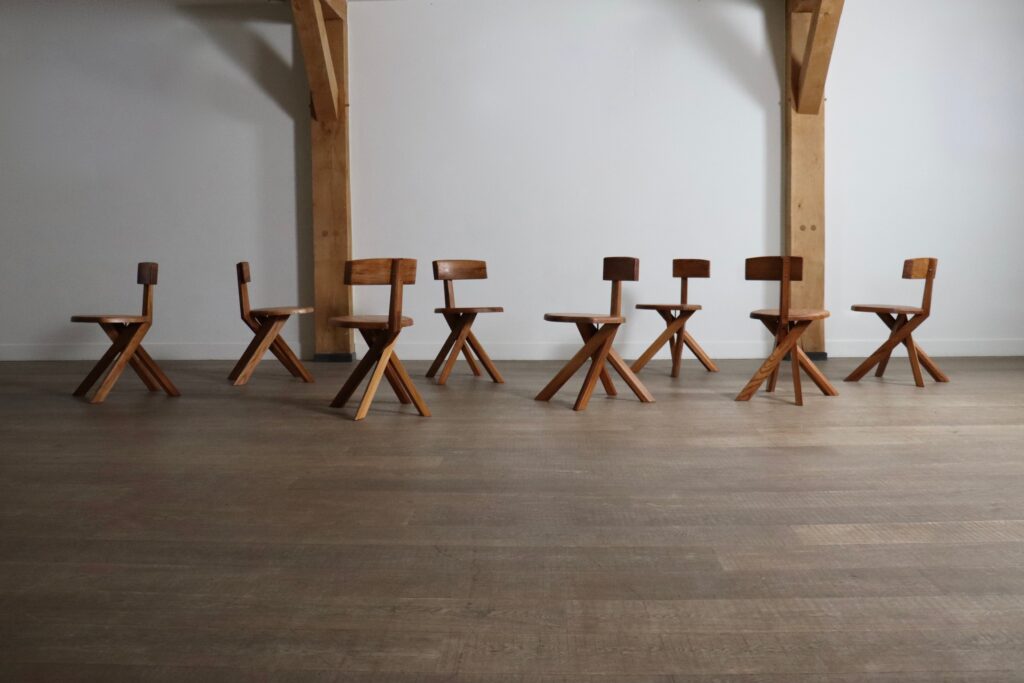
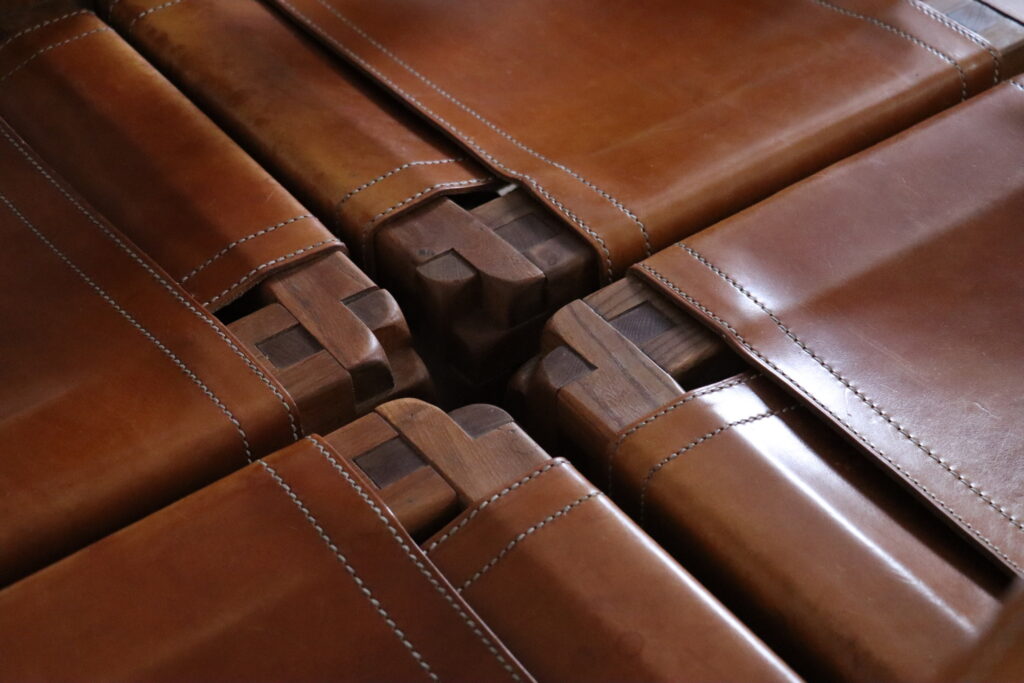
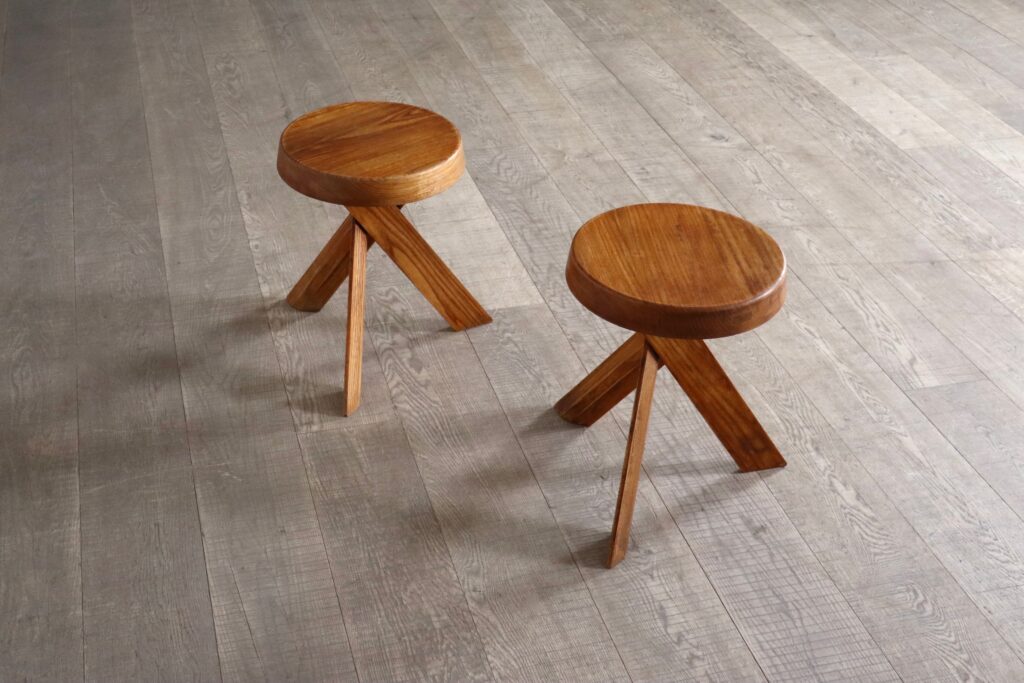
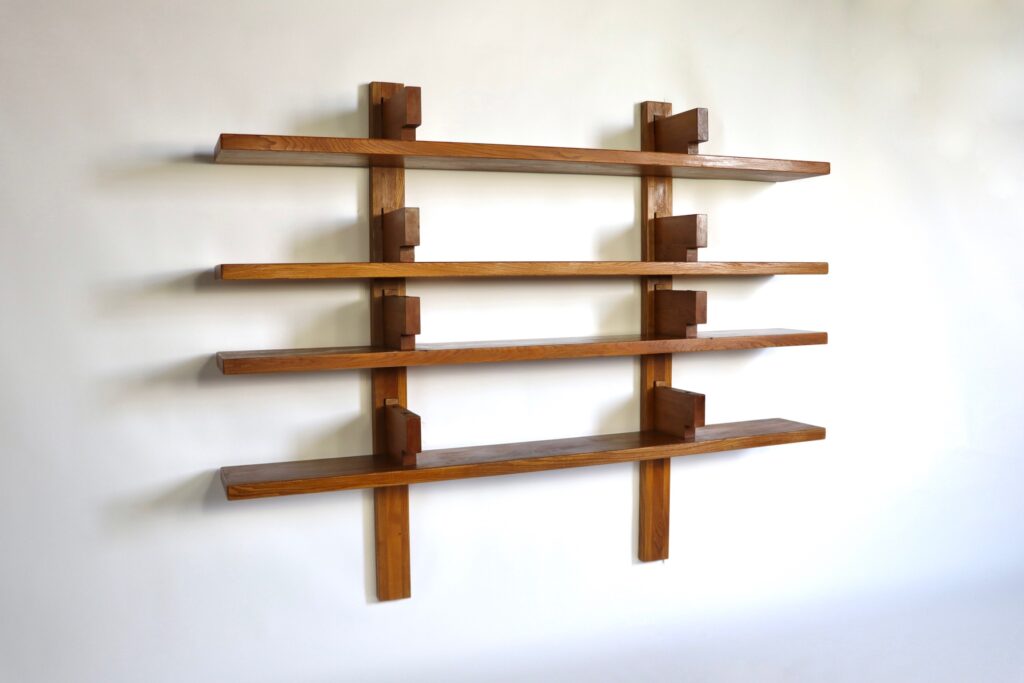
Throughout his career, Chapo worked almost exclusively with solid wood, and specifically with elm, and ocasionally oak and ash. He mastered complex joinery techniques that allowed his designs to breathe without nails or screws, celebrating the natural strength and grain of each piece.
In 1960, he received the Gold Medal of the City of Paris at the Exhibition of Arts and Crafts, recognition for a body of work that balanced craftsmanship with architectural precision. His workshop in Clamart produced many of the now-iconic early designs, including tables and seating known for their harmony of proportion and robust presence.
By the late 1960s, influenced by Charlotte Perriand, Chapo began refining his approach once again. He left Paris in 1968 with his family and settled in Gordes, near Avignon. Surrounded by the Provençal landscape, his furniture took on a more sculptural and grounded quality, but still modern, and yet deeply rooted in tradition. There he founded Chapo Gordes SA, a workshop that continues today under the direction of his son, Fidel Chapo.
Philosophy and Legacy
Pierre Chapo viewed craftsmanship as inseparable from design. For him, joinery, balance, and proportion were not decorative details but the essence of creation. His furniture embodies a rare balance: it is both rational and warm, contemporary yet timeless. The structural integrity of his designs allows them to endure decades of use without losing their quiet grace.