Pierre Jeanneret Desk with Integrated Lamp, Chandigarh, 1950s
Price: €18.500,-
Pierre Jeanneret Desk with Integrated Lamp, Chandigarh, 1950s
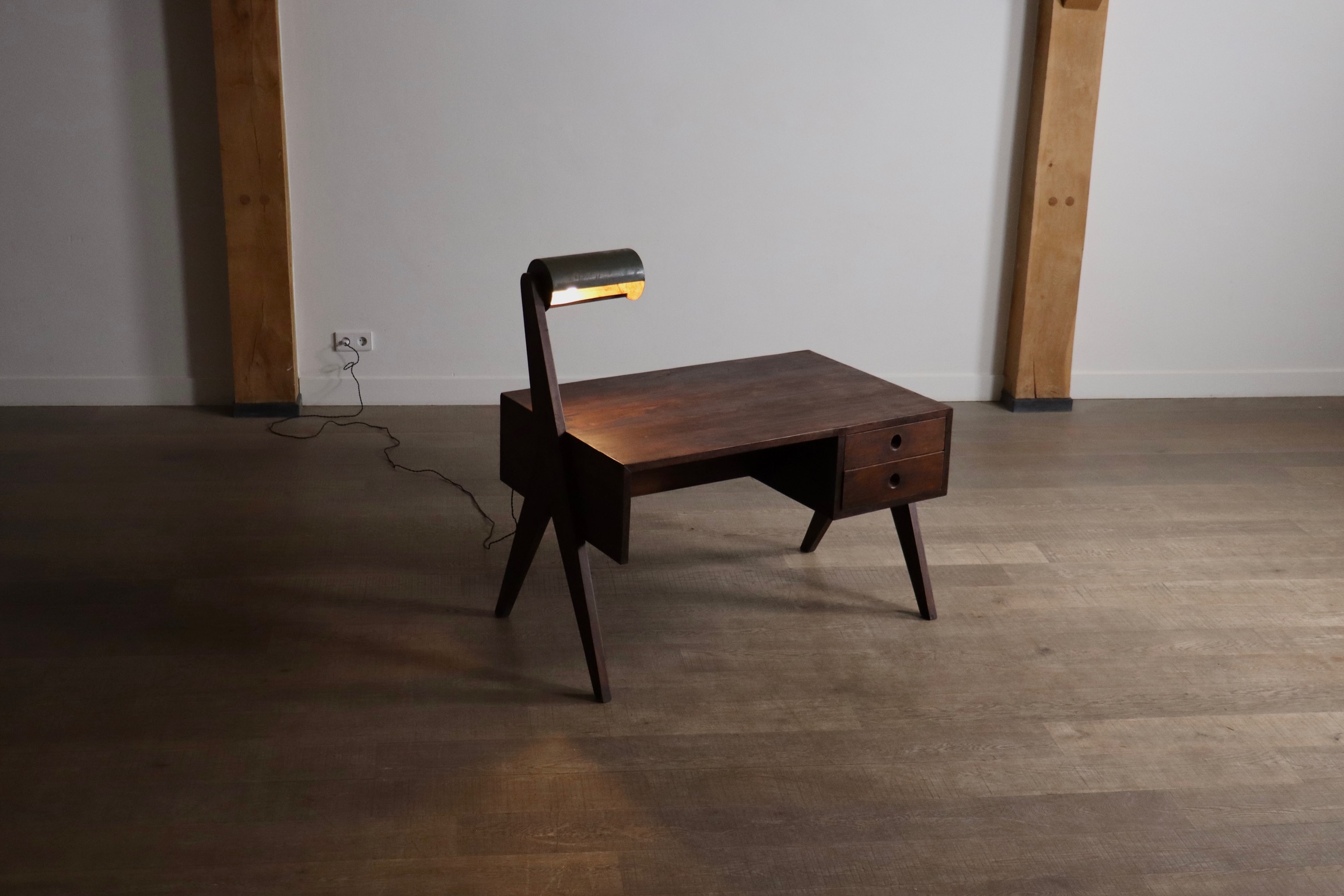
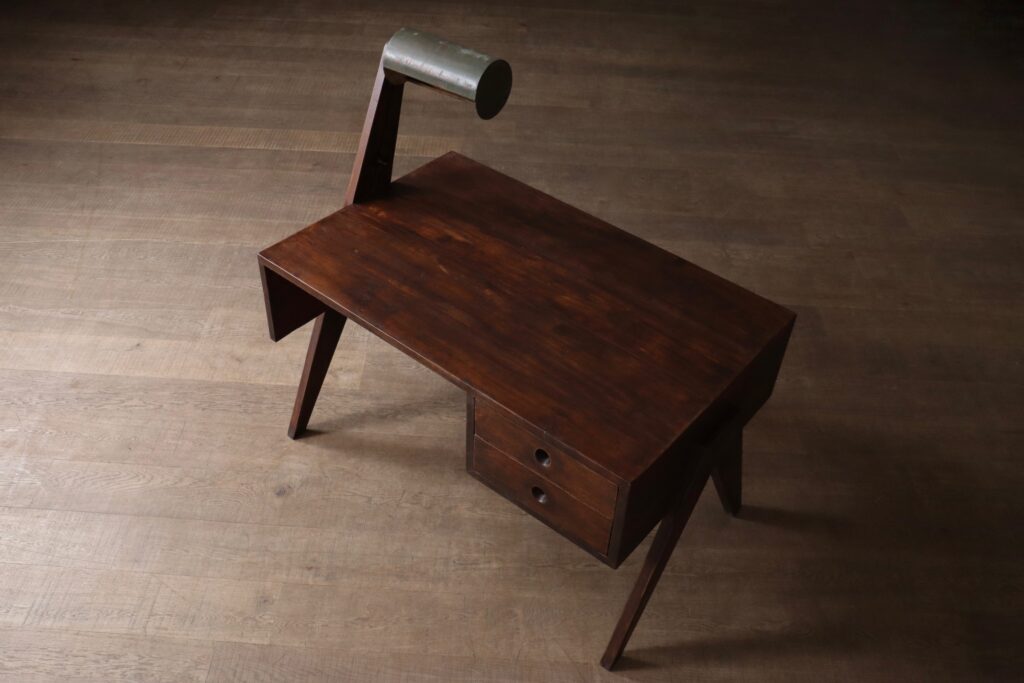
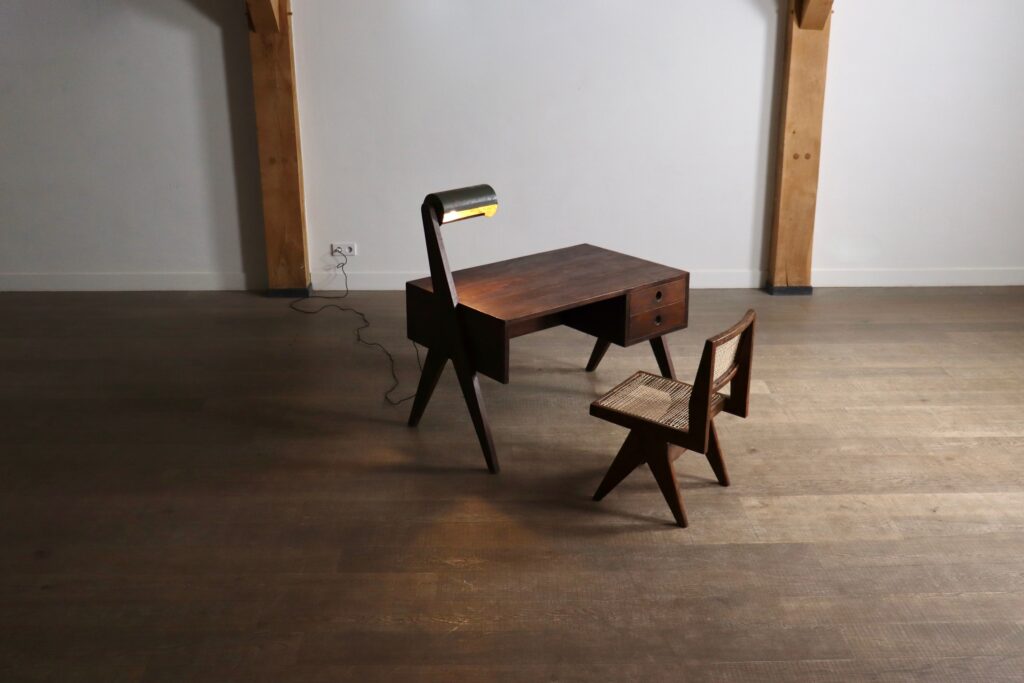
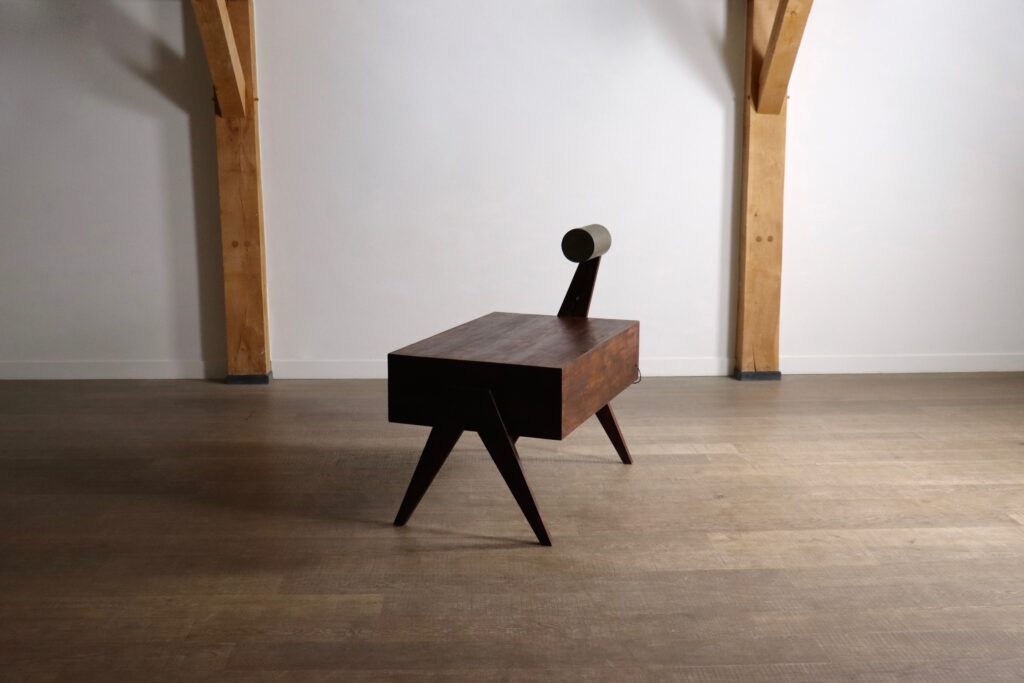
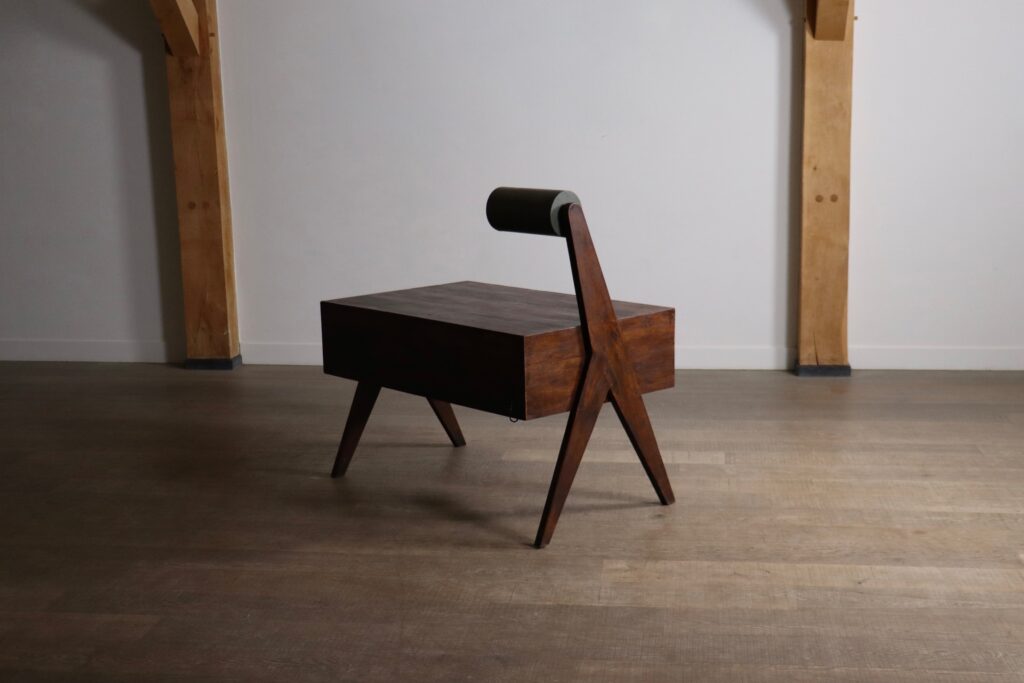
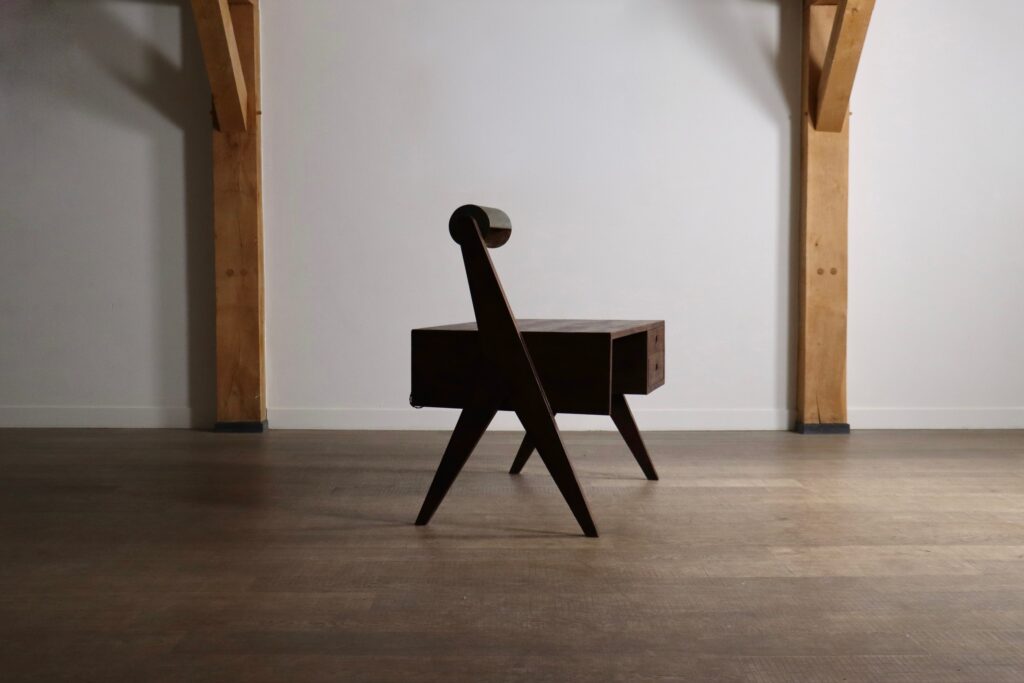
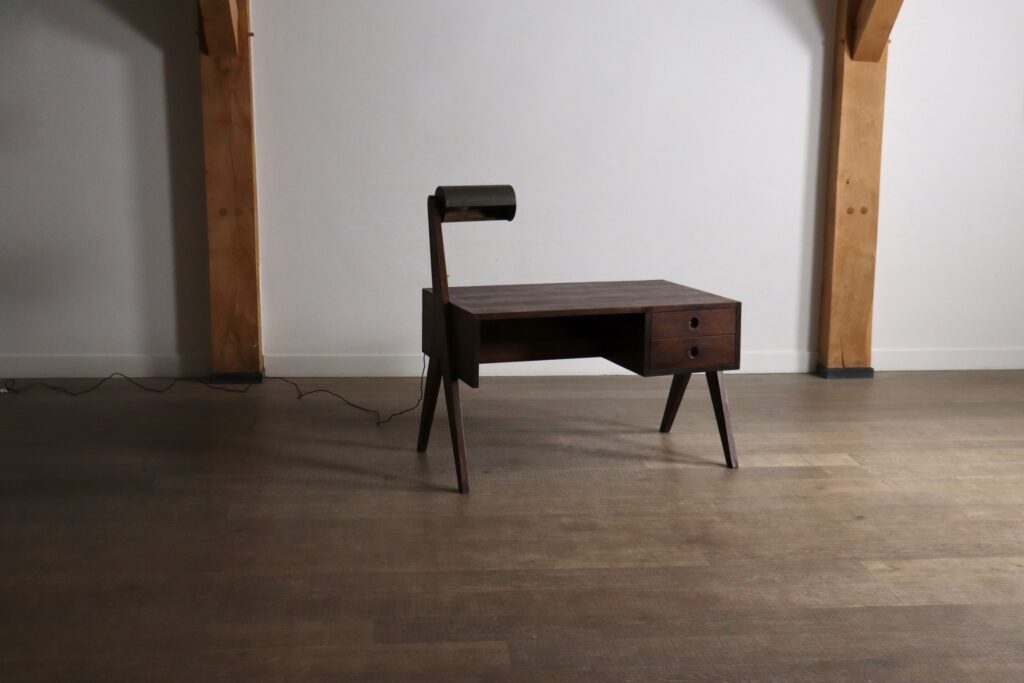
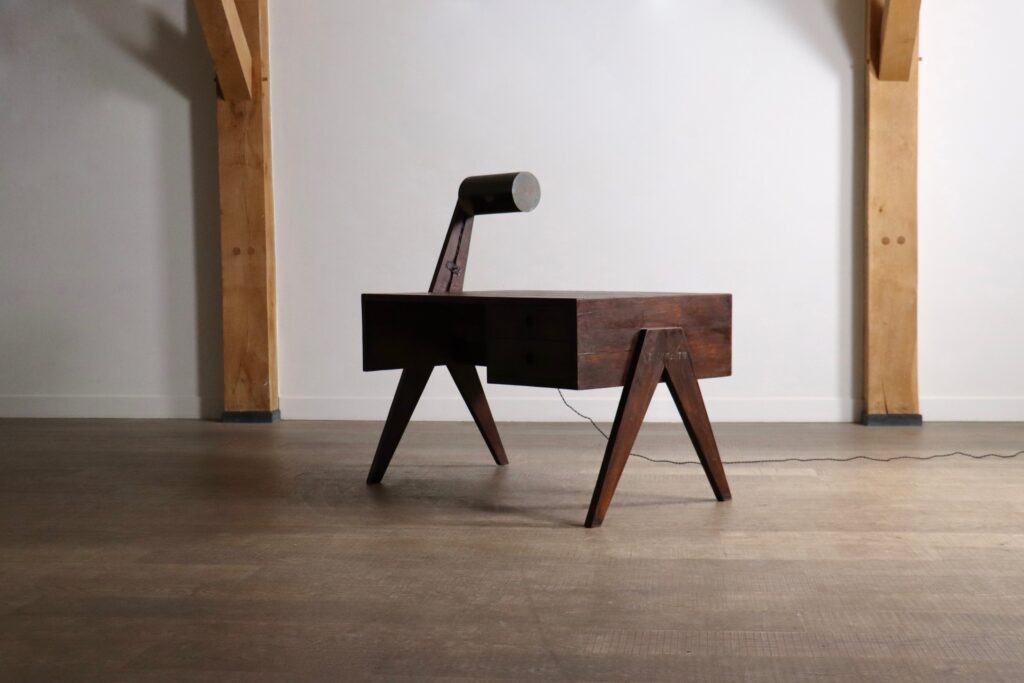
Rare Desk with integrated lamp, designed by Pierre Jeanneret for Chandigarh, India, during the 1950s.
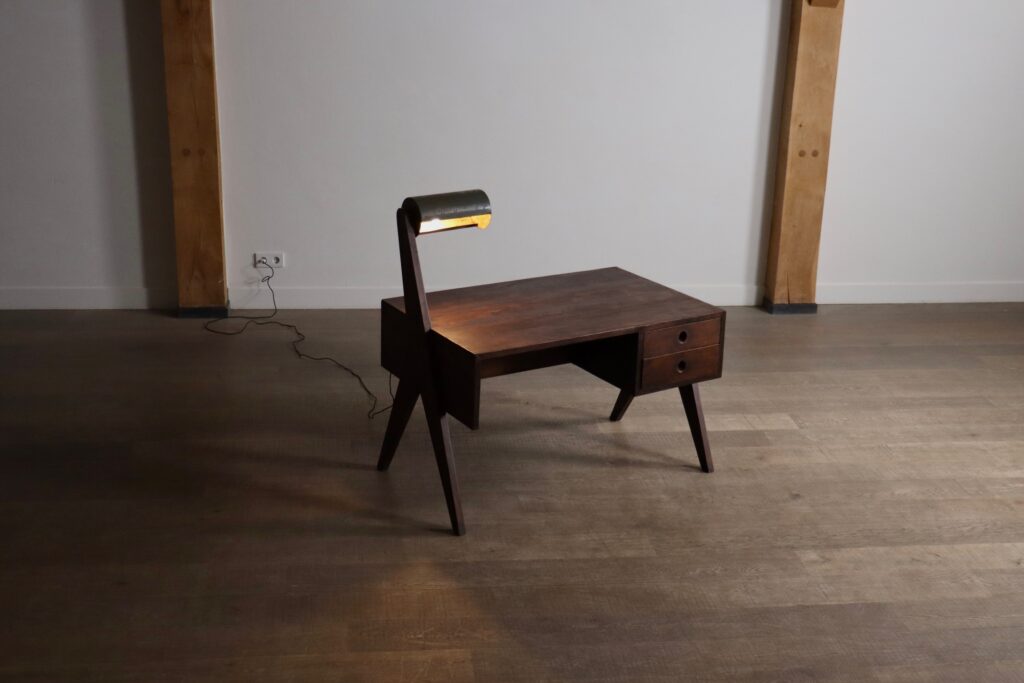
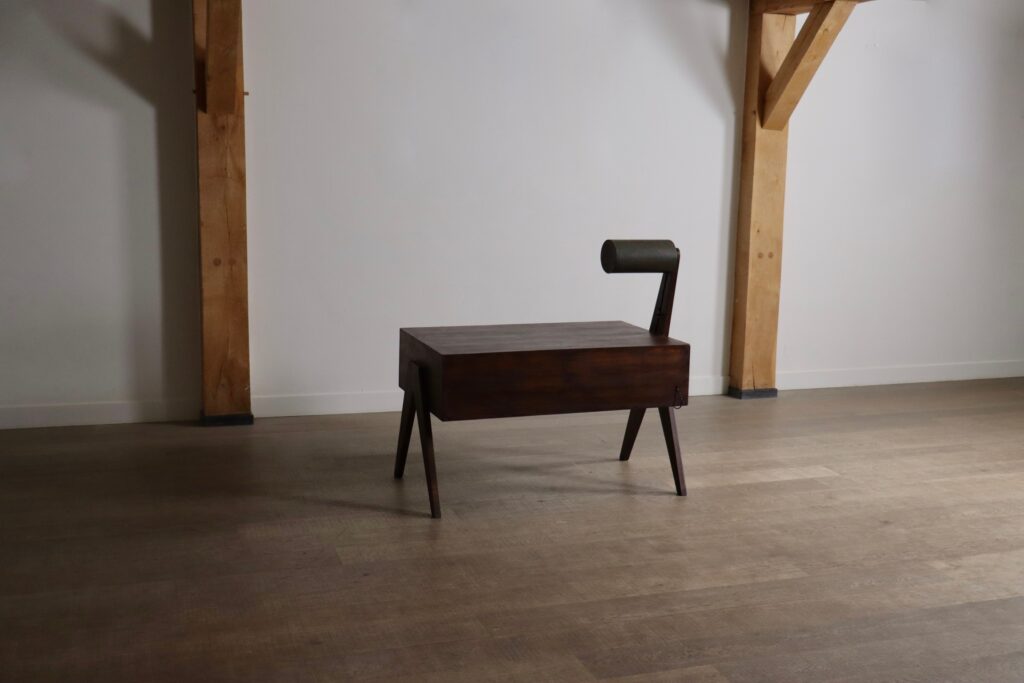
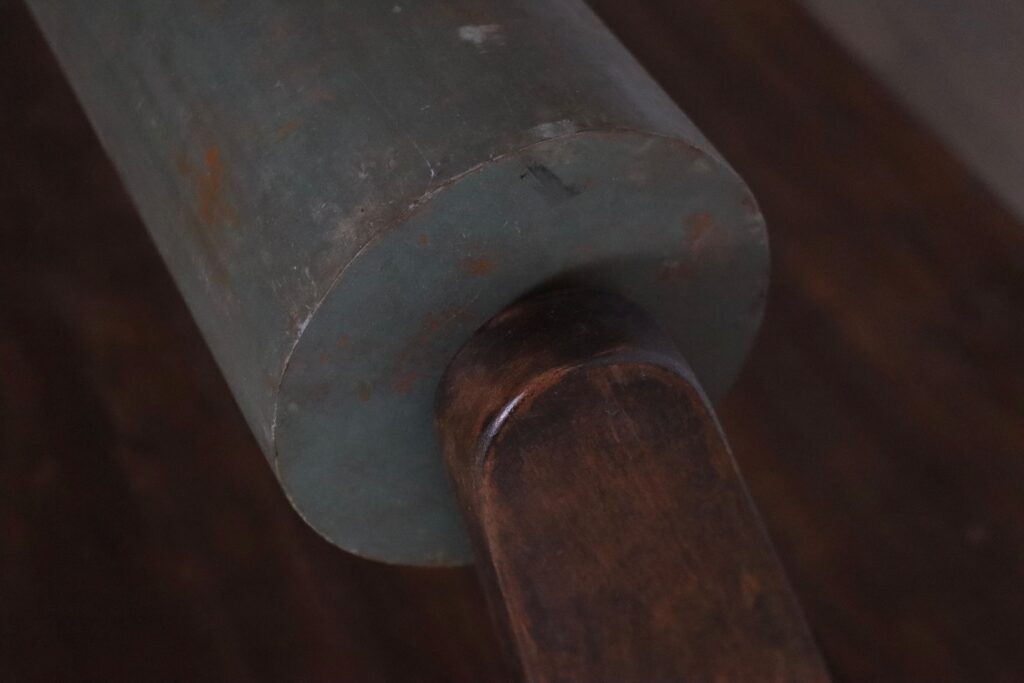
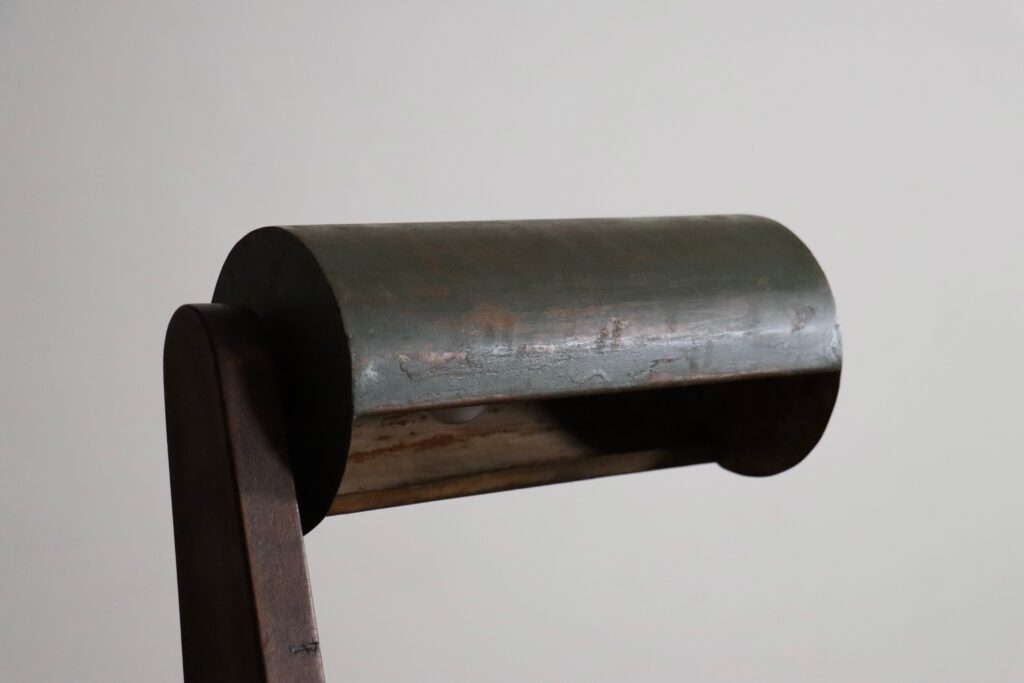
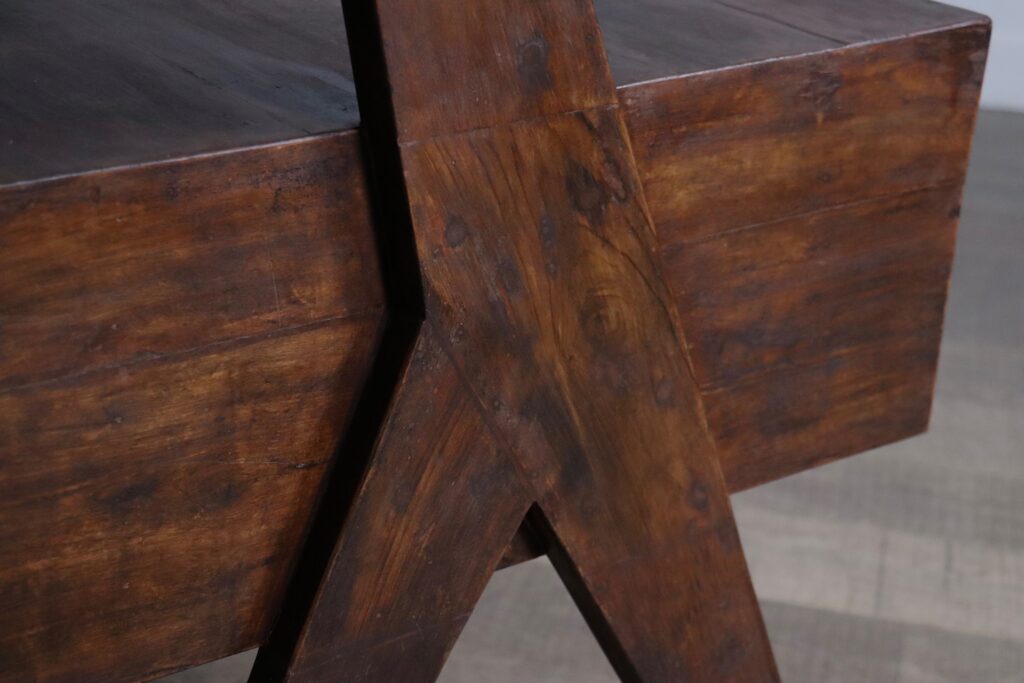
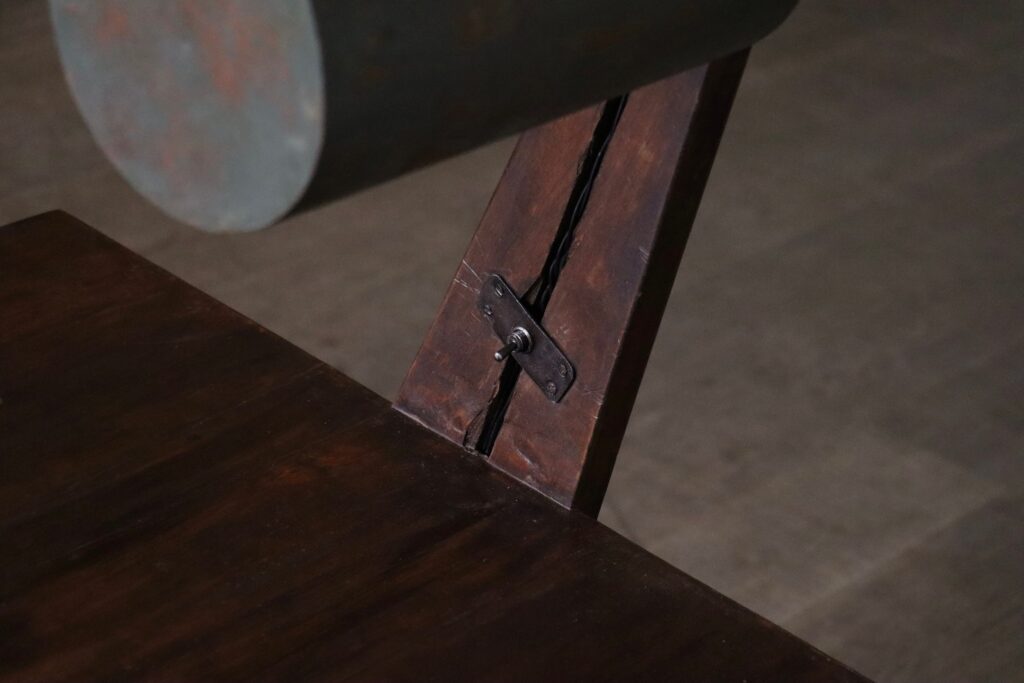
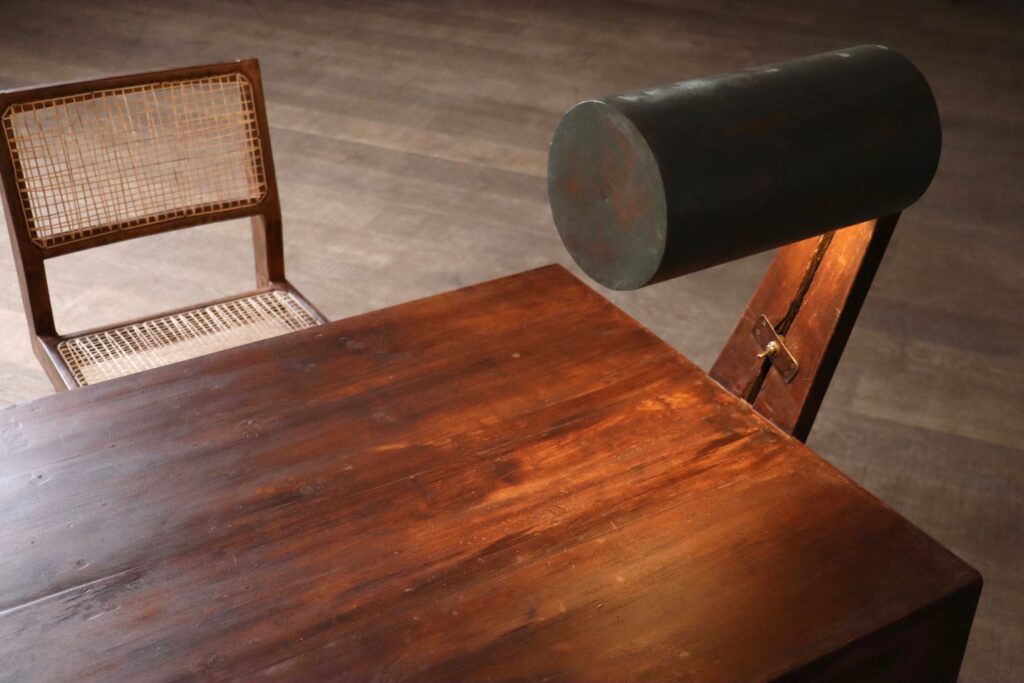
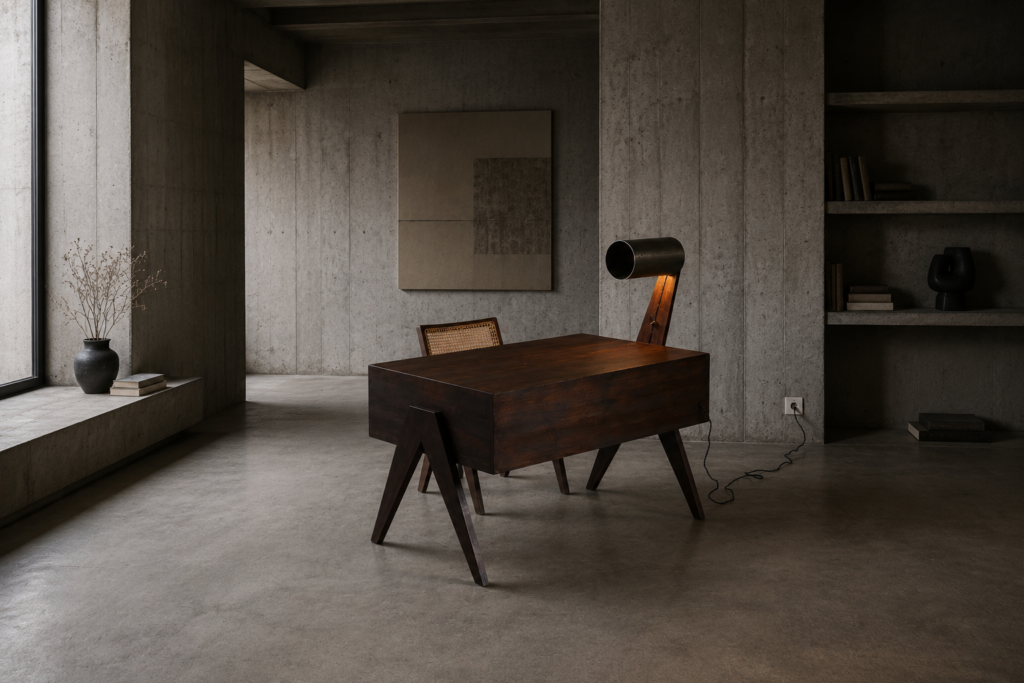
This sculptural desk is constructed in solid teak wood and combines a compact writing surface with a built-in lighting element, creating a highly functional composition. The asymmetrical structure is defined by a strong architectural silhouette, with the integrated lamp rising from one side of the desk and curving over the top. This feature gives the piece a distinct visual identity while reflecting the practical approach that characterises Jeanneret’s Chandigarh furniture.
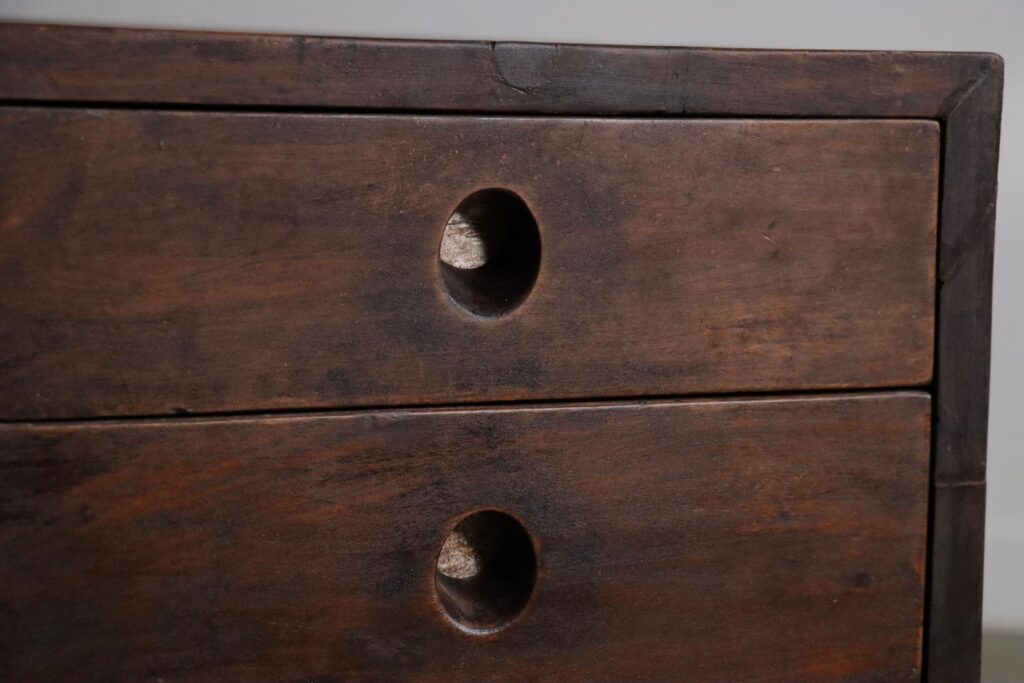
The desk is fitted with two drawers and an open storage compartment, providing useful space for office materials while maintaining a restrained and balanced appearance. The tapered legs and solid side supports create a stable base, while the open area beneath the top keeps the design visually light despite its strong sculptural form.
The combination of practical storage, integrated light and expressive construction makes this desk a particularly distinctive example of Jeanneret’s work for Chandigarh. It was conceived as a functional working piece, yet retains the architectural clarity and material warmth that have made these designs highly sought after today.
Pierre Jeanneret (1896-1967) is recognised as a pivotal figure in modernism. His collaborations with his cousin Le Corbusier are especially significant, particularly their codification of modernist architectural principles in Five Points Towards a New Architecture (1926). Towards the end of their careers the pair also designed a utopian modernist city in India – Chandigarh, and Jeanneret designed some of his most celebrated furniture designs for the administrative buildings in the city.
Appears in the literature: “Le Corbusier, Pierre Jeanneret: Chandigarh, India,” Galerie Patrick Seguin, pp. 248 – 249, 288 and “Le Corbusier, Pierre Jeanneret: The Indian Adventure,” Touchaleaume and Moreau, p. 572.
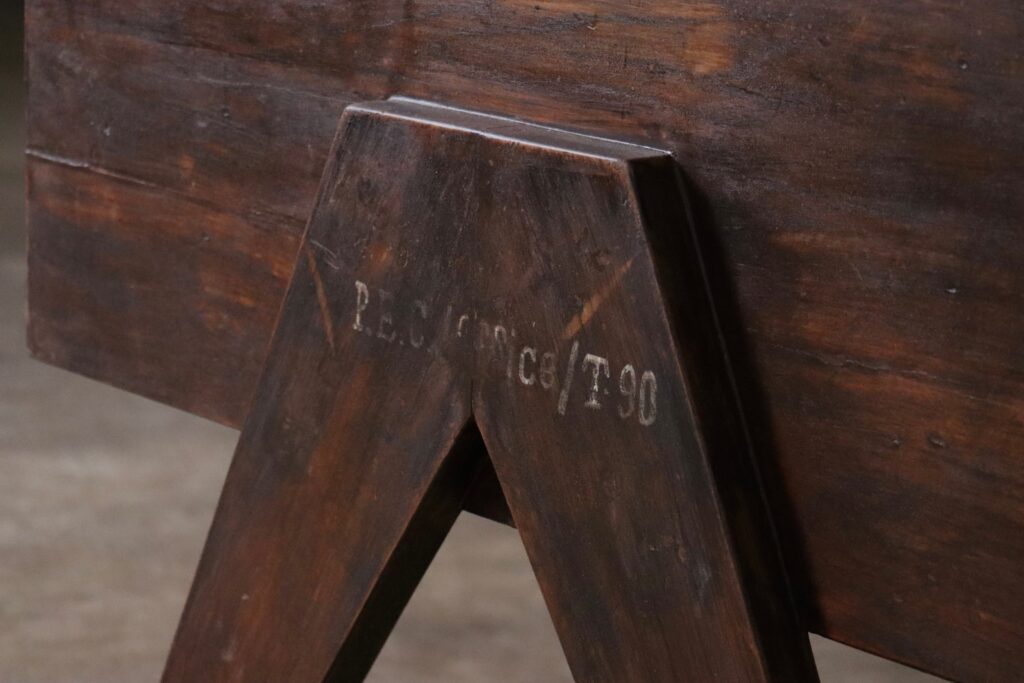
Provenance: Punjab Engineering College, Office table 90, Chandigarh, India